In
1982, a holography NDT technique
entered production at Pratt
& Whitney, combining time
average holography with a low
frequency ultrasonic vibration
applied to the compressor shroud.
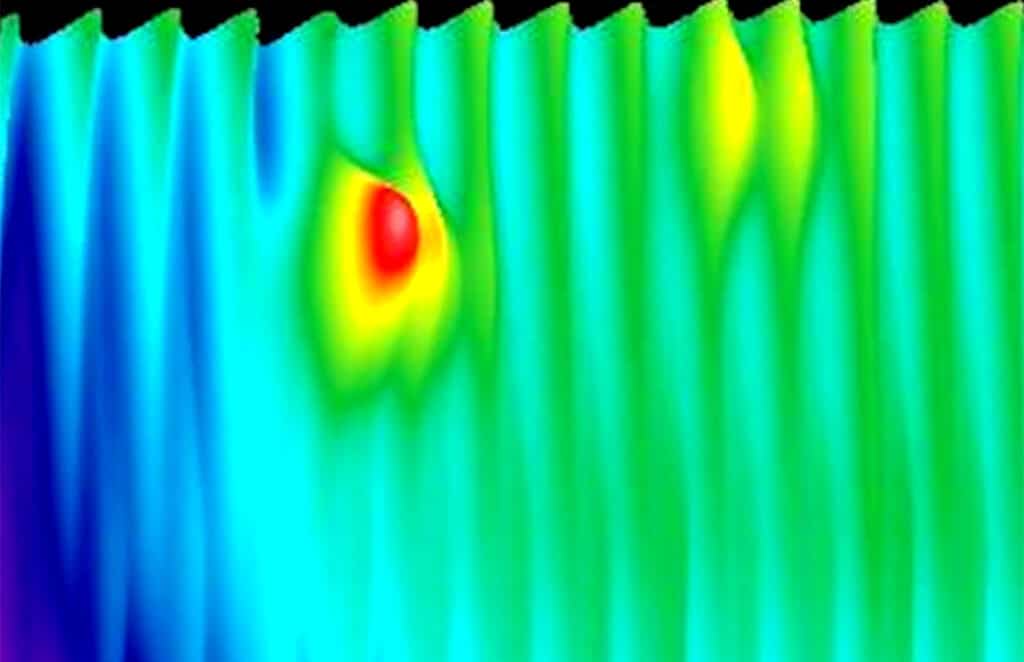
Holography provided excellent
disbond detection with easily
interpreted images essentially
identical to UT results, but
not affected by part geometry,
material thickness changes.
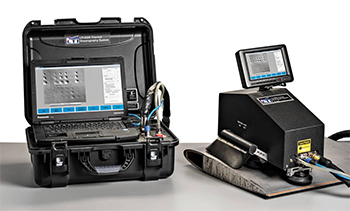
Early systems used film holography
with a one step chemical process,
invented by the author, which
produced production quality
holograms in approximately 10
seconds. The results were viewed
on a video monitor. Electronic
holography currently using mega-pixel
CCD cameras has radically improved
system operation speed and reliability.
Since1982, holography has been
the inspection standard for
Feltmetal and plasma sprayed
aircraft abradable seals.
Holography
inspection has eliminated compressor
seal bond failures, yielded
large financial savings to the
manufacturers and greatly enhanced
customer satisfaction and cost
savings. Similar applications
of holography with vibration
part excitation of bonded metallic
materials on human orthopedic
implants have shown dramatic
improvement in product quality.
Highly automated systems that
monitor all system parameters
have been FDA approved. Together,
these two applications of holography
have yielded significant cost
savings, manufacturing quality
and provide a means for engineering
improvements to processes.